Walk into most HGV depot charging installations built over the past five years and you will find two separate pieces of equipment that happen to sit next to each other: a distribution transformer, bus-connected to a DC charging system. Each was specified by a different contractor, each runs its own protection logic, and neither has any idea what the other is doing.
That separation is the industry default. It is also, increasingly, the reason depot operators are losing money on electricity they never use, running compliance risk on harmonics they can't see, and accepting downtime that a smarter architecture would have prevented entirely.
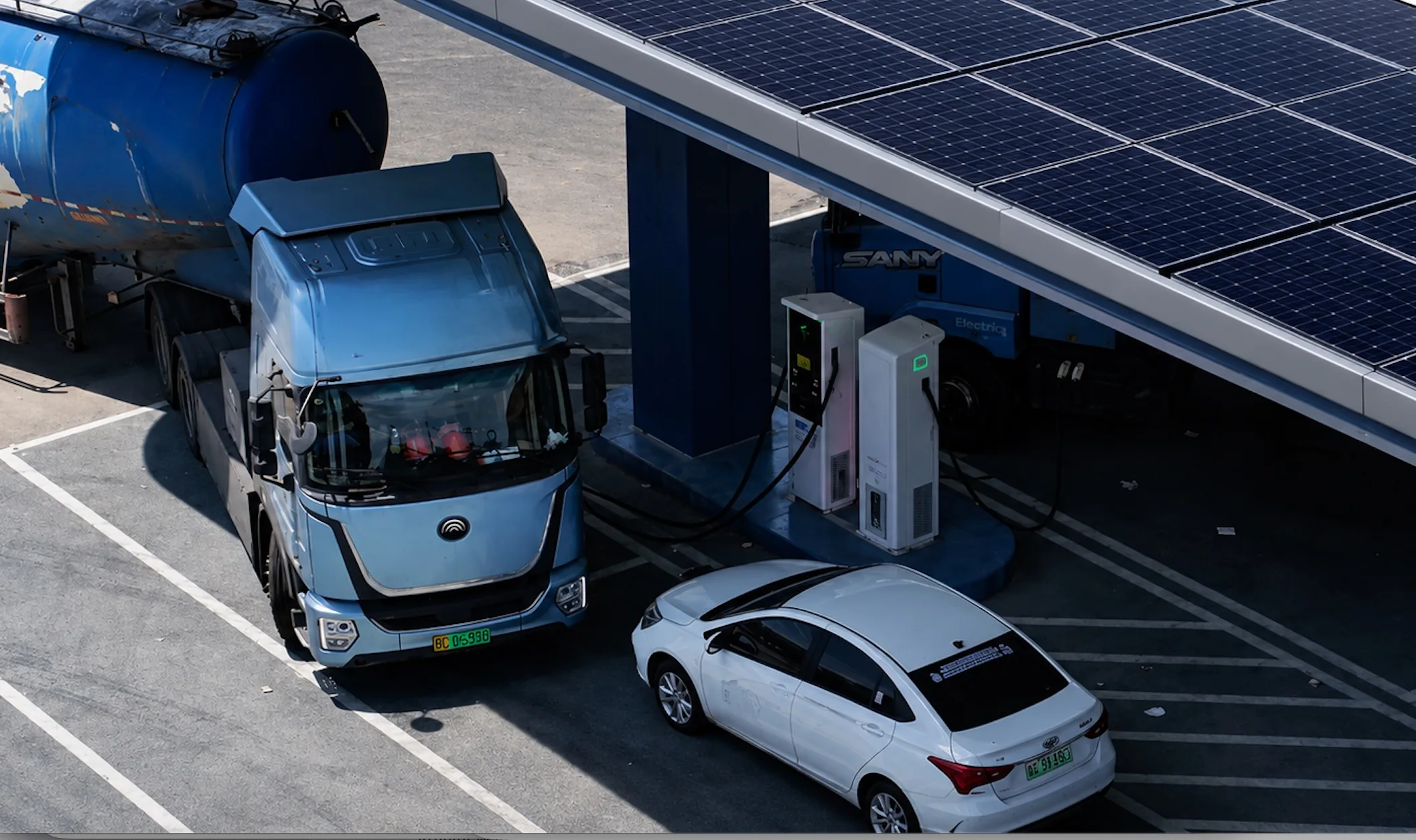
The Problem With Bolting a Charger Onto a Transformer
The conventional depot electrical architecture is a transformer and a charging system connected by a low-voltage bus, operating as two independent devices. Each does its own job and nothing more. That independence creates three specific failure modes that only show up once a depot is running at real utilisation.
Thermal risk with no graceful response. When a transformer runs hot, which happens under sustained high-load charging, especially in summer, its only defence is to trip. There is no intermediate step. The charger doesn't know the transformer is approaching its limit, so it keeps demanding full power until the protection relay operates and the entire bay goes dark.
Harmonic distortion with nowhere to go. DC charging is a non-linear load. Left unmanaged, it injects harmonic currents back into the site's electrical network, interfering with other equipment on the same supply and, in the UK, risking non-compliance with the distribution network operator's harmonic emission limits under Engineering Recommendation G5. Correcting it after the fact usually means retrofitting harmonic filters: an unplanned cost that a better architecture would have designed out from day one.
Conversion losses that compound across every charging session. Every stage between the grid and the vehicle battery (transformer, LV switchgear, rectifier, DC-DC conversion) sheds a small percentage as heat. In a conventional bolted-together system, none of these stages are co-designed, so the losses stack up independently rather than being engineered out as a system.
Why this matters more for HGV depots than for any other site type: for a logistics or haulage operator, the charging bay is a production tool in the same sense as the vehicle itself. A tripped transformer at 5am doesn't just cost the electricity bill. It costs a truck that doesn't leave the yard on schedule.
Inside HV Direct: One Cabinet, Two Cables
Neutron's 11kV HV Direct architecture starts from a different premise: the transformer and the charging system are not two devices that happen to be wired together. They are one integrated system, engineered and controlled as a single unit.
The 11kV transformer, the low-voltage incoming supply, and the charging power modules are all integrated into a single cabinet. The transformer itself is a custom-specified phase-shifting design, paired with a reconstructed, high-efficiency power conversion module, not an off-the-shelf transformer sitting next to an off-the-shelf charger.
| Layer | Conventional depot architecture | HV Direct architecture |
|---|---|---|
| Site connections required | 11kV/HV incoming, LV distribution board, charger power feed, charger control/comms (typically 4+ separate cable runs) | Two: 11kV incoming supply, charging terminal cable |
| Transformer type | Standard distribution transformer | Custom phase-shifting transformer |
| Thermal & charging control | Independent: transformer trips on over-temperature, charger has no visibility | Coordinated: charger current is derated in real time as transformer temperature approaches its limit |
| Harmonic mitigation | None by design; retrofit filtering if non-compliant | Built-in phase-cancellation, measured ~3% THD |
That last row is the practical difference on site. Because the system is designed and controlled as one unit, when the transformer's real-time temperature sensor reports it is approaching its thermal limit, the charging modules automatically reduce output current, rather than continuing at full demand until the transformer protection trips. The bay stays live at reduced power instead of going dark entirely.
Harmonic Cancellation by Design, Not by Retrofit
The phase-shifting transformer does more than convert 11kV to the voltage the charging modules need. It functions as a harmonic filter for the site.
Different charging circuits are routed through windings with different phase angles. The harmonic currents each circuit's rectifier stage generates are phase-shifted relative to one another as a result, so a meaningful share of them cancel out on the high-voltage side before they can propagate into the site's wider electrical network. In measured HV Direct installations, this brings total harmonic distortion down to around 3%, well inside the levels that typically concern a UK distribution network operator, and without the site ever needing a dedicated harmonic filter bank.
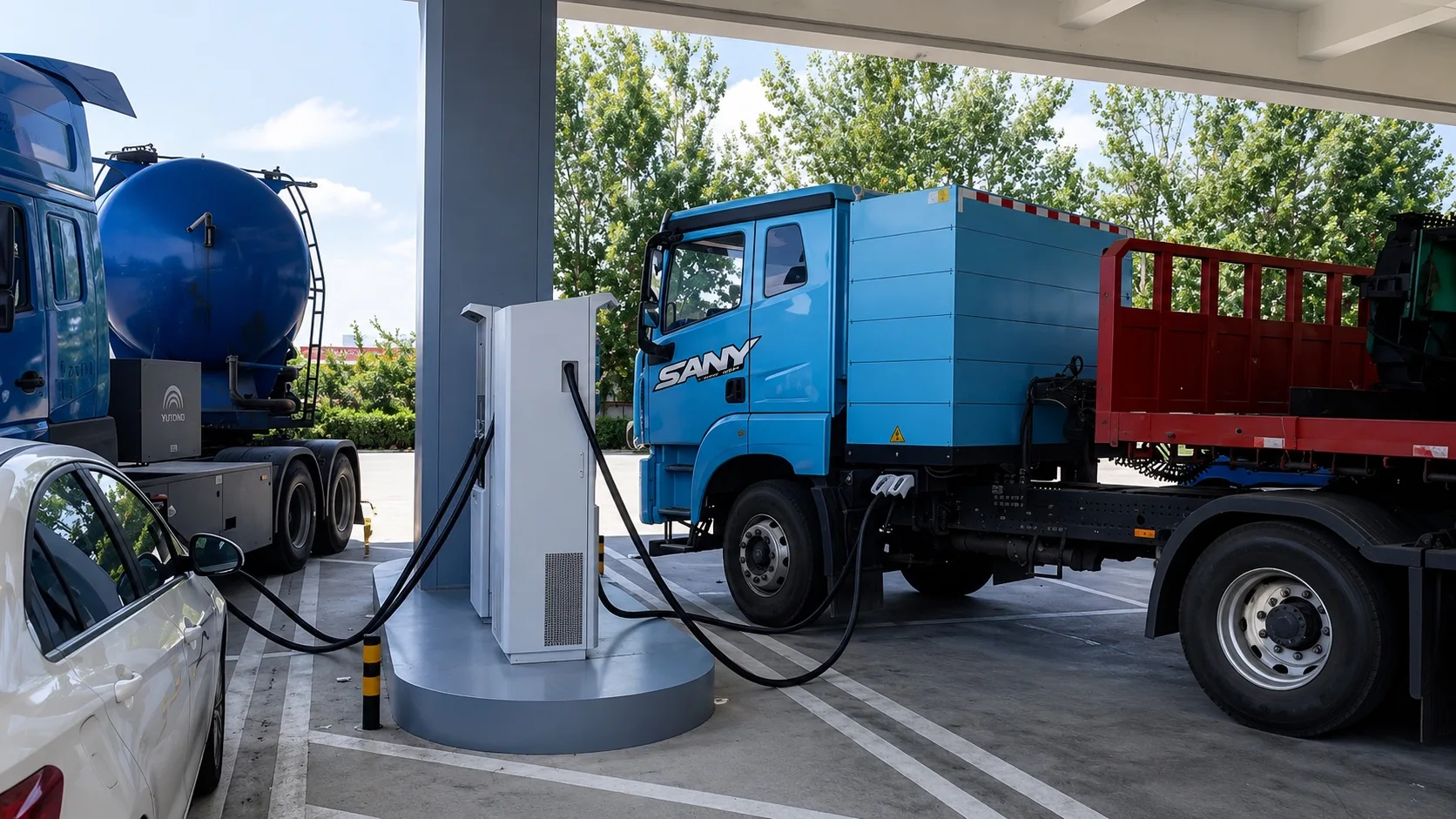
The Efficiency Case: 96% vs 92%, Grid to Battery
The efficiency figure that matters for a depot operator isn't the charger's own conversion efficiency in isolation. It's the system-level number, measured from the grid connection all the way to the energy that actually reaches the vehicle battery. That's the number that determines the electricity bill.
Buy 100 units of electricity from the grid on a conventional system, and roughly 92 reach the vehicle. The other 8 are lost as heat across the transformer, switchgear and conversion stages. On HV Direct, 96 of those 100 units reach the vehicle. That four-percentage-point gain sounds modest until it's run against a real depot's annual electricity spend.
Conventional (92%): 3,000,000 ÷ 0.92 = 3,260,870 kWh purchased
HV Direct (96%): 3,000,000 ÷ 0.96 = 3,125,000 kWh purchased
Electricity saved: 135,870 kWh/year
At 17p/kWh overnight commercial rate: ≈ £23,100/year
That saving comes purely from conversion efficiency, on electricity cost alone, before accounting for the harmonic filter equipment a conventional site may need to retrofit, or the cost of an unplanned trip during a scheduled overnight charging window. Scale the same 4-percentage-point gain to a busier site or a larger transformer, and the saving scales with it.
Assumptions: 2,500 kVA transformer, 2,400 kW total charging capacity across 6 bays, each bay averaging 500,000 kWh delivered per year (around 14% utilisation against the 400 kW per-bay rating, consistent with a dedicated fleet depot rather than opportunistic public charging), overnight commercial electricity at 17p/kWh. Actual utilisation and tariff will vary by site; figures are indicative.
Two Cables, Ten Days: The Installation Case
Efficiency is the ongoing saving. Installation speed is the upfront one, and for HGV depot operators racing to bring capacity online against fleet electrification deadlines, it is often the more immediately felt benefit.
A conventional depot build requires an 11kV or HV incoming connection, a separate LV distribution board, a charger power feed, and charger control and communications wiring, typically procured from several contractors on separate programmes, each with its own civil works. Because HV Direct integrates the transformer and charging modules into a single factory-built cabinet, the site only needs two connections: the 11kV incoming supply, and the charging terminal cable. A three-unit HV Direct installation can typically be commissioned in around 10 days.
The saving here isn't just fewer cables in the ground. Every eliminated cable run is a shorter trench, less ducting, and one less interface between contractors where scope disputes and delays tend to originate. A separate LV switchroom is civil works, planning, and a footprint that a single prefabricated cabinet doesn't need. Across a typical HV Direct project, Neutron measures this as up to a 35% reduction in project engineering cost against a conventional site-built equivalent, with delivery timelines up to two-thirds shorter, because a factory-built cabinet compresses a multi-contractor civil and electrical programme into a single installation and commissioning step.
Why HGV Depots Specifically
None of this is architecture for its own sake. A charging bay at an HGV depot is a production tool, not an amenity, the same way the truck itself is a production tool. Uptime, not peak specification, is what the site actually needs from its electrical infrastructure.
HV Direct's real-time coordination between transformer and charger is what delivers that uptime: rather than an all-or-nothing trip when things run hot, the system degrades gracefully, keeping trucks charging at reduced power rather than not charging at all. Combined with the efficiency gain and the compliance headroom on harmonics, it is infrastructure built around what a depot actually needs from its power supply, rather than a charger and a transformer that were simply installed next to each other.
Frequently Asked Questions
What is 11kV HV Direct charging?
11kV HV Direct is a medium-voltage charging architecture that integrates the 11kV transformer, low-voltage incoming supply and charging power modules into a single cabinet, connected to the site by only two cable runs: an 11kV incoming supply and a charging terminal cable. It replaces the conventional approach of a standalone transformer bus-connected to a separate charger.
How does a phase-shifting transformer reduce harmonics?
A phase-shifting transformer splits the charging load across multiple secondary windings with different phase angles. The harmonic currents generated by each winding's rectifier stage are phase-shifted relative to one another, so they largely cancel out on the high-voltage side rather than propagating into the site's electrical network. In measured HV Direct installations, this reduces total harmonic distortion to around 3%.
How much more efficient is HV Direct than a conventional transformer-plus-charger setup?
Neutron's HV Direct architecture achieves approximately 96% system-level conversion efficiency, measured from the grid connection to the vehicle's battery, compared with approximately 92% for a conventional separate transformer-and-charger installation. That four-percentage-point gain means roughly 4% less electricity is purchased from the grid to deliver the same energy to the fleet.
How quickly can an HV Direct site be installed?
Because HV Direct integrates the transformer and charging modules into a single factory-built cabinet, a site only needs two cable connections: the 11kV incoming supply and the charging terminal run. A three-unit HV Direct installation can typically be commissioned in around 10 days, compared with the multi-contractor civil and electrical programme a conventional transformer room requires.
Eliminate the transformer bottleneck at your depot.
Neutron's 11kV HV Direct architecture integrates transformer and charging power modules into a single cabinet: 96% system efficiency, ~3% harmonic distortion, and commissioning in days rather than months.
See the HV Direct specification →