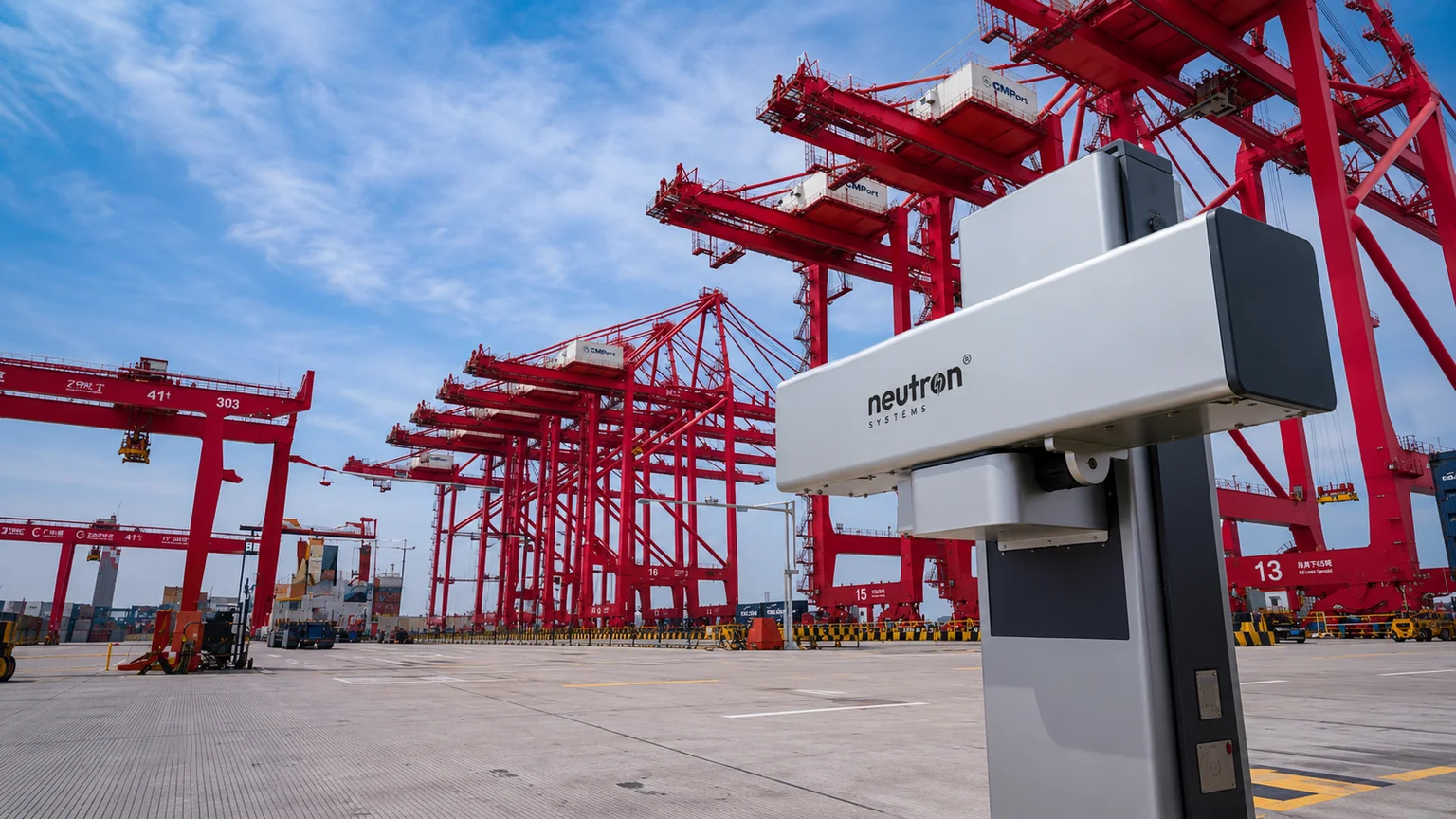
The electrification of UK commercial fleets is accelerating faster than most operators anticipated. Royal Mail, DPD, Evri, and Amazon UK have collectively deployed tens of thousands of electric vans. National Express and Arriva are running electric buses across dozens of routes. The hardware (vehicles, chargers, grid connections) is increasingly well understood.
But a structural bottleneck remains, and it is not one that more charging points will solve. It is human: someone has to plug the vehicle in.
In a 24/7 logistics depot running three shifts, someone has to connect and disconnect chargers at the start and end of every shift. In a 200-van fleet, that adds up to real labour cost, and a real point of failure:
- Missed connections
- Incorrect plugging sequences
- Cable damage from vehicle movements
Margins are tight and operating hours are long. The last manual step in an otherwise automated process is also its most visible weak point.
The fundamental contradiction: if a vehicle can navigate autonomously, why does it still need a human to plug it in? Autonomous EV charging is not a convenience feature; it is the logical completion of the automation investment that fleet operators and port terminals are already making.
Autonomous EV charging removes that bottleneck entirely. The vehicle navigates to its charging bay. The charging system connects itself. Charging completes according to the optimal schedule. The vehicle is ready for dispatch, with no human intervention at any point in the cycle.
This is not a future concept. Commercial deployments are already operating at scale in port terminals and logistics facilities across Europe and Asia. The question for UK fleet operators is not whether autonomous charging will arrive, but where it makes the strongest operational case today, and what technical approach fits their specific environment.
Three Waves of Adoption: Where the UK Market Stands
Autonomous charging will not arrive uniformly across all sectors at once. Its commercialisation follows a clear sequence, driven by where the operational case is strongest and where the technical environment is most controlled. Understanding where each wave stands in the UK today is the starting point for any serious evaluation.
Wave One: Closed-Site Autonomous Operations
The first commercial deployments of autonomous charging are happening in environments where the variables are tightest: fixed vehicle routes, standardised vehicle types, known charging inlet positions, and no unpredictable human traffic. Port container terminals and large-scale distribution centre AGV (Automated Guided Vehicle) fleets are the clearest examples.
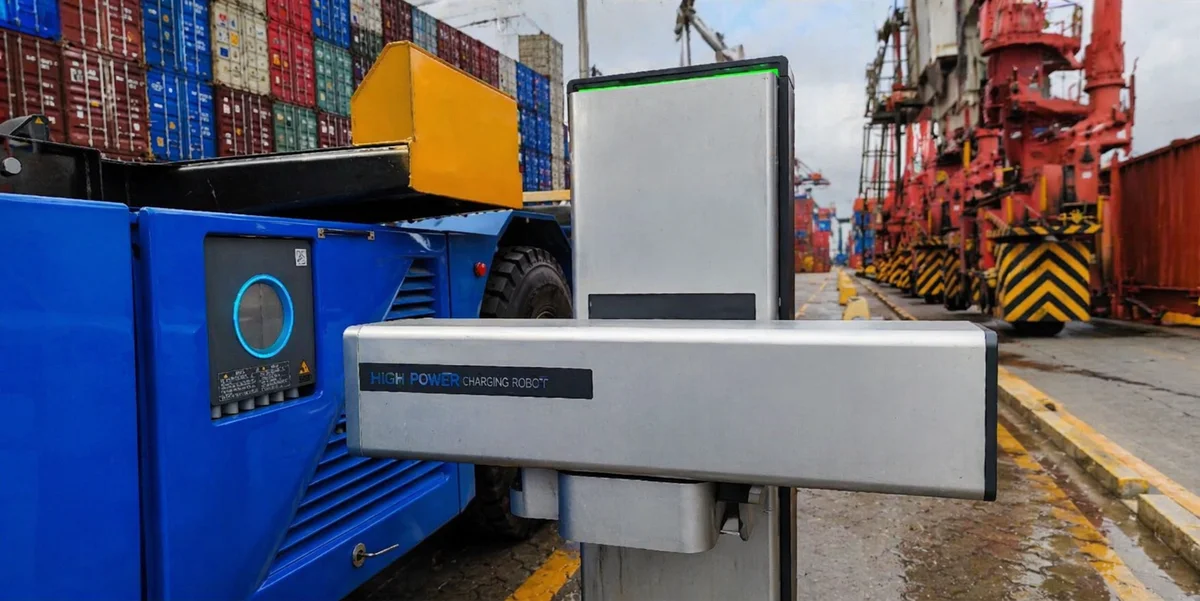
Neutron's high-power charging robot deployed at a container port terminal. The robotic arm autonomously connects to electric port vehicles without driver intervention.
The Port of Felixstowe, DP World's London Gateway, and the Port of Southampton are all investing in terminal automation, with electric port vehicles central to their zero-emission commitments. For these operators, autonomous charging is not a premium add-on. It is a prerequisite for the next stage of terminal automation.
The business case is unambiguous. Terminal vehicles operate continuously across multiple shifts. Human intervention at the charging point is both a labour cost and a safety risk. And the vehicle fleet is standardised enough to make automated connection reliable from day one.
The commercial model in these environments is clear. The buyer is the terminal operator. The operational pain is quantifiable. The willingness to pay for a system that eliminates a human dependency from a 24/7 operation is high. This is why closed-site autonomous charging is the segment closest to mainstream commercial deployment in the UK today.
Wave Two: Autonomous Mobility Fleets
The second wave follows the deployment of autonomous passenger and delivery vehicles. Wayve (the London-based autonomous driving company that raised over $1 billion in recent funding rounds) is developing urban autonomous vehicles for deployment in UK cities. Autonomous delivery robots from companies including Starship Technologies already operate across UK university campuses and town centres. Autonomous shuttle services are running in controlled environments from Milton Keynes to Edinburgh.
All of these vehicles share a common requirement: if they operate without human drivers, they must also charge without human intervention. A robotaxi that requires a ground crew member to plug it in between rides has not removed the human from the loop; it has simply moved the dependency from the driving seat to the charging bay.
The charging requirement for autonomous mobility is also more demanding than for depot-based fleets. These vehicles need to:
- Charge opportunistically during low-demand periods
- Return to charging bays without human direction
- Resume service as soon as charging is complete
The entire cycle (navigate to charger, connect, charge, disconnect, return to service) must be fully automated.
In the UK, this wave is entering its first commercial phase. As autonomous mobility scales from pilot to commercial operation across UK cities, autonomous charging infrastructure becomes a critical path dependency: not optional, not a future upgrade, but a prerequisite for the economics of unmanned operation to work.
Wave Three: Consumer and Premium Parking
The third wave, and eventually the largest by volume, is consumer EV charging in public and residential parking. The scenario is straightforward to describe: a car self-parks, a robotic charging system connects automatically, and the vehicle is ready when the driver returns. No interaction with charging hardware required.
Several UK vehicle manufacturers and major parking operators are already piloting this model. The constraint is not technical feasibility. It's cost: today's autonomous charging equipment carries a premium over conventional chargers, and that premium has to be justified by the value it delivers.
The economics already work in premium residential developments, hotel and leisure parking, and corporate facilities where the target user is the premium EV driver. Full mass-market adoption follows as hardware costs fall over the next three to five years.
| Segment | UK Readiness | Primary Driver | Key Buyers |
|---|---|---|---|
| Port & Terminal AGV | Commercial now | Labour elimination, safety, 24/7 ops | Port operators, terminal managers |
| Logistics depot fleets | Early commercial | Shift-change automation, reliability | DPD, Royal Mail, Amazon, 3PLs |
| Autonomous mobility | Pilot to commercial | Prerequisite for unmanned ops | Wayve, AV operators, local authorities |
| Premium parking | Pilot deployments | User experience, differentiation | Parking operators, developers |
| Mass-market consumer | 3–5 year horizon | Convenience, cost parity | Consumers, residential operators |
The Two Technical Approaches
Behind the diversity of autonomous charging applications, there are fundamentally two engineering approaches. Understanding the difference matters for any operator evaluating the technology, because the choice determines both capital cost and long-term operational economics.
One-to-One: A Dedicated Arm per Bay
The earliest autonomous charging deployments used a dedicated robotic arm permanently assigned to each charging bay. The arm identifies the vehicle's charging inlet using 3D computer vision, aligns to sub-millimetre precision, and connects the cable without human assistance.
The advantages are clear: the arm is always available for its assigned bay, connection is fast, and each unit operates independently of every other. For the highest-value applications where every bay must be available at all times and response speed is critical, a one-to-one deployment offers the maximum performance ceiling.
The disadvantage is capital cost. A precision robotic arm engineered for reliable autonomous charging across hundreds of thousands of operating cycles is expensive hardware. At today's prices, one-to-one deployments are economically justified in the highest-value specific applications: premium parking, vehicle manufacturer showrooms, and research facilities where the cost can be absorbed into a defined business case or a premium customer proposition.
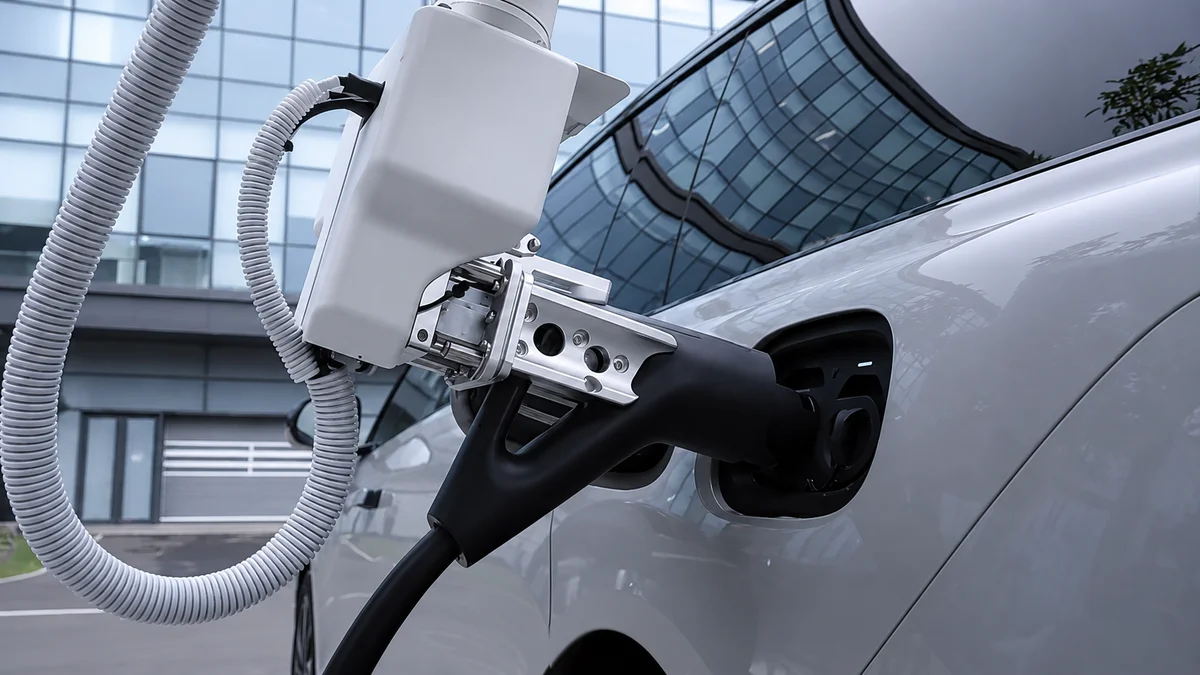
A robotic arm autonomous charging system for passenger vehicles. Computer vision locates the inlet to sub-millimetre accuracy; connection and disconnection require no driver involvement.
One-to-Many: The Rail-Mounted Approach
The commercially scalable approach, and the one attracting the most investment from logistics operators and port terminals globally, is the rail-mounted robotic arm that serves multiple bays from a single unit.
In this configuration, a robotic arm travels along an overhead or floor-level rail, serving six to ten bays from a single mechanism. The arm positions itself at the bay where a vehicle requires charging, completes the connection, and returns to standby once charging begins. When the vehicle is ready to depart, the arm disconnects and moves to the next vehicle in the queue. The economic logic is directly compelling: one arm does the work of six to ten fixed units at a fraction of the combined capital cost.
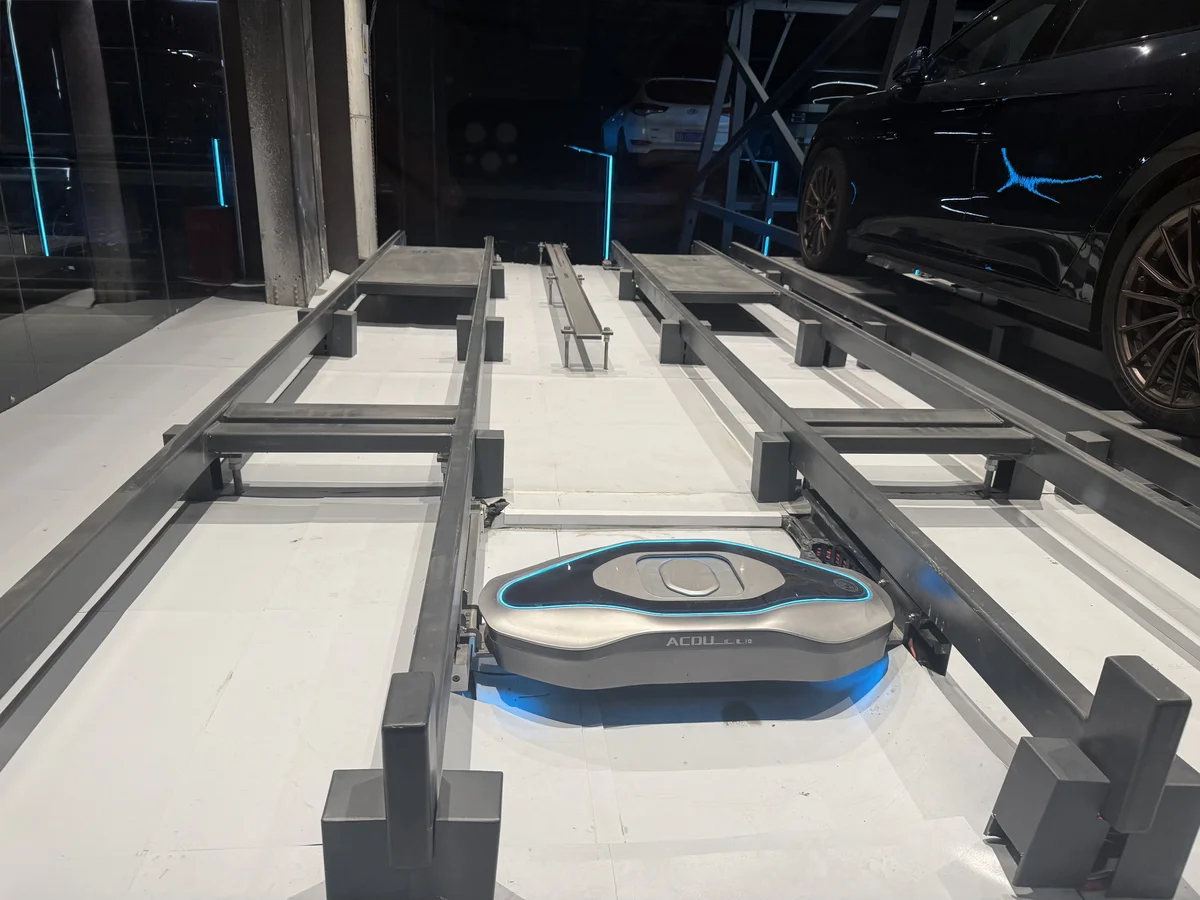
A rail-mounted autonomous charging robot. The single unit travels between bays on precision tracks, connecting and disconnecting without any human involvement across the full row.
Utilisation is naturally high because vehicle bays rarely all require simultaneous connection. In an overnight logistics depot, vehicles arrive in staggered waves at shift end and depart on staggered schedules at shift start. A single arm managing the connection cycle across a row of ten bays handles real-world depot operations comfortably. Its cycle time between connection events is simply shorter than the time between consecutive vehicle arrivals.
The technology behind the one-to-many approach has matured significantly. Current systems connect to within one millimetre of accuracy, using 3D structured-light vision, even when a vehicle isn't parked in exactly the same spot every time. The rail mechanism is rated for hundreds of thousands of operating cycles, built to last as long as the charging infrastructure it serves.
For UK logistics operators evaluating autonomous charging at depot scale, one-to-many is the right starting point: lower capital cost, lower ongoing maintenance, and a deployment model that scales cleanly across standard depot rows.
Heavy Vehicle and HGV Autonomous Charging
For heavy goods vehicles and large fleet vehicles, the case for autonomous charging is, if anything, stronger than for passenger vehicles. A standard articulated HGV is 16.5 metres long. A double-deck bus is over 14 metres long and more than 4 metres tall.
Now picture manually connecting a high-power DC cable to a vehicle that size, at the end of a 10-hour shift, in a depot that may be below freezing in winter. That's real fatigue risk and real cable damage risk, at every single connection.
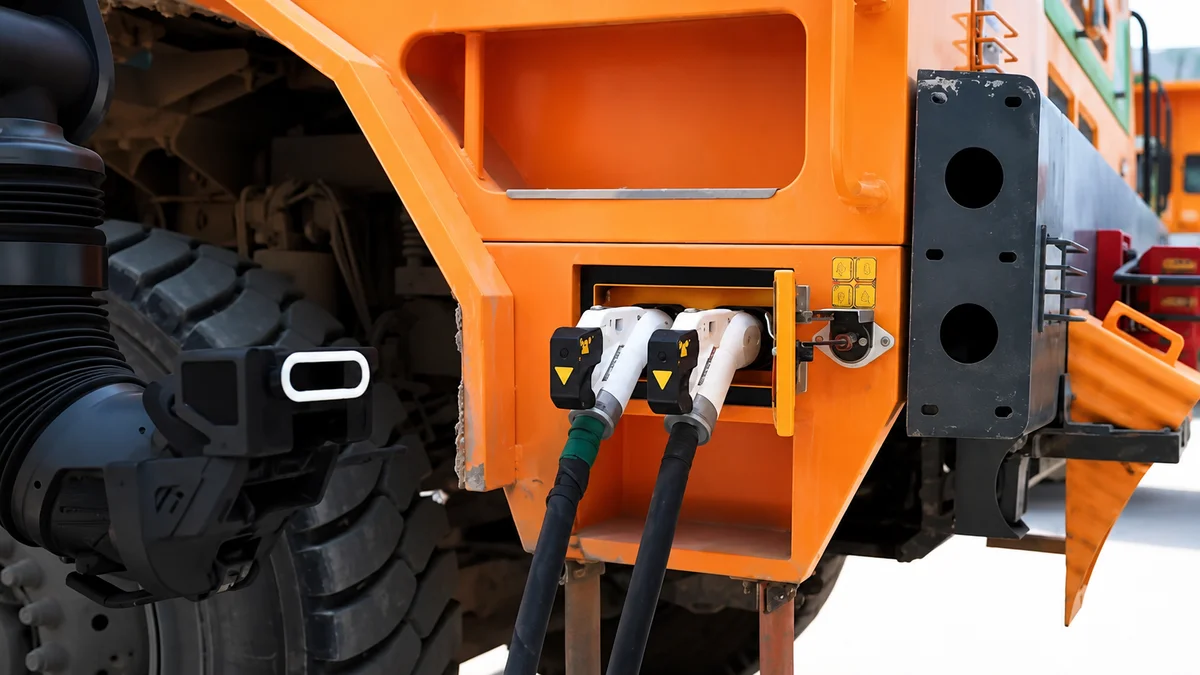
Automatic dual-connector charging for heavy electric vehicles. The system handles high-power connections autonomously, eliminating the manual handling risk associated with large-format DC cables at shift change.
Autonomous charging for heavy vehicles removes the manual handling requirement from what is, in physical terms, the most demanding connection task in the depot. The system locates the vehicle's inlet, positions the connector, and completes the high-power connection without driver involvement. For logistics operators running large electric HGV fleets, this translates directly into:
- Reduced cable wear
- Reduced connector damage
- Eliminated manual handling risk at every connection event across the fleet's operating life
The Integrated Smart Park and Charge Model
For covered parking facilities, distribution centres, and multi-storey logistics hubs, the most complete autonomous charging solution integrates vehicle positioning with charging connection rather than treating them as separate infrastructure problems.
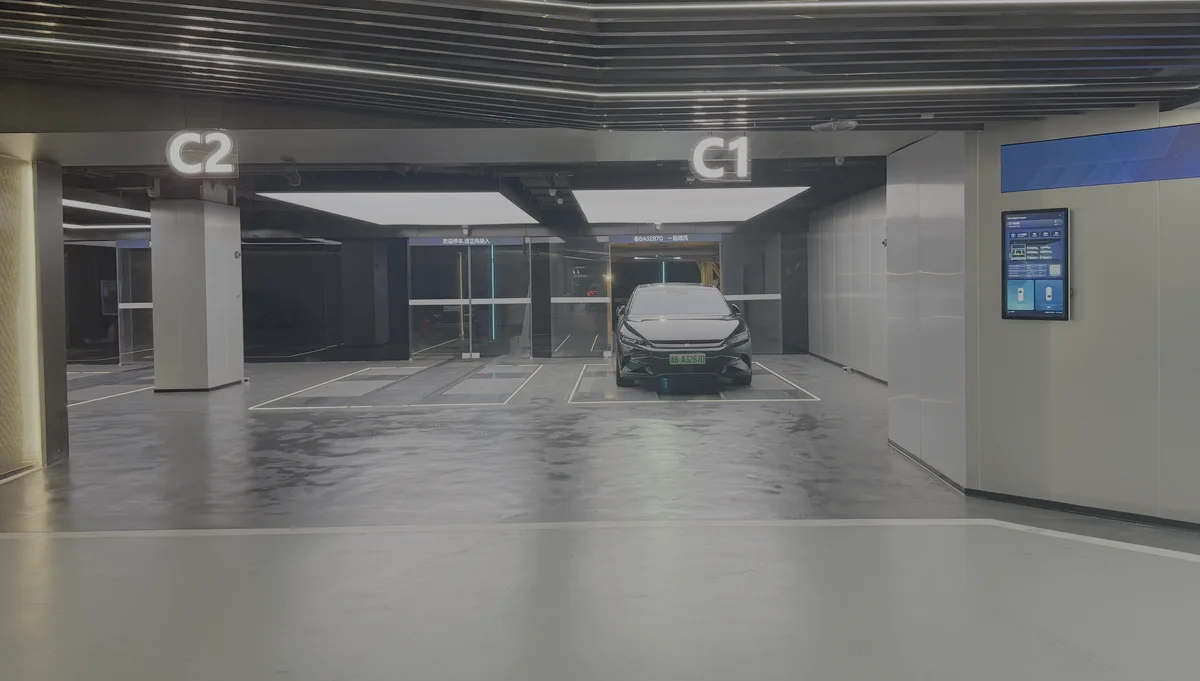
An integrated Smart Park & Charge facility. The vehicle enters, automated systems handle positioning, and autonomous charging connects once the vehicle is stationary, with no driver interaction with any infrastructure.
In this model, a vehicle enters the facility and is automatically positioned in the optimal bay by the parking management system. Once stationary, the autonomous charging unit connects without any driver involvement. When charging is complete and the vehicle is required, it is automatically repositioned for departure. The driver's interaction with the facility is limited to dropping off and collecting the vehicle. Everything between those two moments is handled by the integrated system.
For commercial parking operators, this model delivers a genuinely differentiated service. The vehicle charges while the driver is in the office or shopping, with no engagement with charging infrastructure required. For logistics operators with constrained depot footprints, it also maximises space efficiency. Vehicles are positioned optimally by the system rather than parked according to driver preference, and charging connectivity is guaranteed rather than dependent on driver compliance.
Neutron's Smart Park & Charge system provides this integrated capability for UK and European logistics, commercial parking, and fleet depot operators. The system combines automated vehicle positioning with autonomous EV charging in a single managed platform. It is designed for the specific structural characteristics of UK covered facilities, from multi-storey car parks with constrained ceiling heights to large-footprint distribution centres with AGV-ready floor infrastructure.
What UK Operators Should Be Evaluating Now
Autonomous charging is at the stage where early deployment decisions create durable operational advantages. Operators who commit to a technical approach and accumulate operational experience in 2026 will have both learning-curve advantages and supplier negotiating leverage that later movers will not.
The evaluation questions are straightforward:
- Where in your operation does the manual charging connection create the clearest cost or risk?
- Which vehicle types and depot layouts characterise your fleet?
- Does your operation pattern favour a one-to-one or one-to-many deployment model?
- Does your facility's structure support an integrated smart parking approach, or is autonomous charging connection the specific bottleneck to solve?
For UK logistics and parcel delivery operators, port terminal managers, and commercial parking facility operators, the answers to those questions point to a deployment window that is open now, backed by commercial technology proven in the operating environments most relevant to the UK market.
The vehicles are electric. The depots are being equipped. Connecting the two without a human in the loop is the last step, and the one that completes the automation.
Frequently Asked Questions
What are the two technical approaches to autonomous EV charging?
A fixed robotic arm, one arm per bay, offering the highest speed but the highest cost, and a rail-mounted arm, where one unit serves up to 10 bays by moving along a rail, offering lower cost per bay at somewhat lower per-bay speed.
How accurate is autonomous vehicle connection for EV charging?
Autonomous charging robots achieve connection accuracy of under 1mm using 3D vision guidance to locate and align with the vehicle's charging inlet.
Can autonomous charging work for heavy vehicles and HGVs?
Yes. Autonomous charging robots can be configured for heavy goods vehicles and HGVs, extending the same fixed-arm or rail-arm approaches used for cars and vans to larger vehicle inlets and higher-power connections.
What is the advantage of autonomous charging over manual charging for fleet depots?
Autonomous charging operates 24/7 with no shift patterns and no missed connections, removing the human labour bottleneck that limits how many vehicles a depot can turn around as fleet size scales.
Autonomous Charging for Your UK Operation
Neutron Systems supplies autonomous EV charging solutions for port terminals, logistics depots, and smart parking facilities across the UK and Europe. Contact us to discuss your operational requirements.
View Smart Park & Charge