Fleet managers electrifying bus and HGV depots typically spend their capital budget on the right thing — the vehicles. Infrastructure gets a residual line. A common pattern: £1m on four heavy-duty electric trucks, £150k on chargers, and an informal assumption that the grid connection will sort itself out.
The assumption is where projects stall.
What the DNO Actually Says
Most commercial sites have a grid connection sized for their historical load. For a diesel bus depot or logistics yard, that might be a 200–400A three-phase supply — enough to run the building, yard lighting, and maintenance workshop. It is not enough to charge twelve 40-tonne electric trucks overnight.
When fleet teams contact the Distribution Network Operator to upgrade it, the responses follow a recognisable pattern. Timescales of 18–24 months. Reinforcement costs of £200,000 to £400,000 — more where primary substation work is required. An application process that runs in parallel with, but rarely synchronised to, procurement and planning timelines.
The result: vehicles are delivered. Chargers are installed. The power to run them arrives eighteen months later.
The hidden cost: most operators budget for the chargers. Almost none budget for the grid connection — which is often the largest single line item in the infrastructure project.
The Architecture That Changes This
The standard response to a grid constraint is to request more power from the grid. A better approach is to design for the power you already have.
The Neutron Master Unit — available at 240 kW or 480 kW — converts the available AC supply to a high-voltage DC bus. That DC bus is what the satellite charging terminals draw from when vehicles plug in. But it is also the connection point for battery storage and PV generation.
When a Power Hub (215 kWh usable capacity, 100 kW continuous output, LFP chemistry with 10,000+ cycle life) connects to that DC bus, the system operates on a fundamentally different logic:
- During off-peak hours — overnight, early morning — the storage charges slowly from the existing supply.
- When a vehicle plugs in, the storage discharges at high power into the DC bus, supplementing the grid.
- The effective peak power available to vehicles is the grid supply plus the storage discharge rate — without any DNO upgrade.
A site with a 200 kW grid connection and two Power Hubs in parallel (430 kWh combined, 200 kW discharge) can deliver 400 kW of peak DC charging power. Two 480 kW Master Units sharing that DC bus can distribute it intelligently across up to sixteen satellite terminals — across the full yard, at up to 350 kW per bay with liquid-cooled connectors.

A Neutron Master Unit installed at a UK depot site. The single cabinet handles AC-to-DC conversion for the entire yard; satellite terminals at bay level connect via a single DC bus cable run.
Adding Solar: The DC Bus as an Energy Platform
The Master Unit's DC bus is not only a charging distribution system. It is an energy integration platform.
PV generation — rooftop or carport-mounted — connects to the same DC bus through a DC-coupled inverter. Power generated during daylight flows into the bus directly. During the day, this reduces net draw on the grid connection, charges the storage for evening and overnight use, and displaces grid energy at peak commercial tariff rates — typically 30–50p/kWh for commercial sites on half-hourly settlement.
A 100 kW rooftop array on a UK bus depot generates roughly 85,000–100,000 kWh per year. At a commercial rate of 30–50p/kWh, that represents £25,000–£50,000 in displaced energy annually — before any export benefit.
Neutron Grid EMS manages the full dispatch logic — grid input, storage state of charge, PV generation, and live vehicle demand — simultaneously. Fleet operators see a single energy dashboard. The system handles sequencing automatically, without manual intervention.
What a Bus Depot Configuration Looks Like in Practice
A municipal operator running 24 vehicles from a single depot with a 350 kW grid connection needs to deliver roughly 960 kWh of energy overnight. Distributed across a 10-hour window, that averages under 100 kW — well within the existing supply. The constraint is not total energy. It is peak power when multiple buses arrive simultaneously at shift changeover.
| Component | Specification | Role |
|---|---|---|
| Master Units | 2 × 480 kW (960 kW total) | AC-to-DC conversion, grid interface, power management |
| Power Hub ESS | 4 × 215 kWh (860 kWh / 400 kW) | Peak discharge buffer; charges overnight from existing supply |
| Satellite Terminals | 16 across the yard | Bay-level DC distribution, metering, vehicle comms |
| Solar PV | 100 kW rooftop, DC-coupled | Daytime generation; reduces grid draw and charges storage |
| Neutron Grid EMS | Real-time dispatch | Grid, storage, PV and demand orchestration |
| Electron CMS | OCPP 2.0.1 | Charge session management and reporting |
With this configuration, ESS discharge absorbs peak arrival demand. The overnight window recharges storage against the existing supply. PV offsets daytime maintenance charging. No DNO upgrade required. One grid connection application — for the two Master Units — rather than sixteen separate agreements.

A fleet depot with multiple active charging bays. The Master Unit architecture requires one grid connection application and one DC cable route from the plant room, regardless of how many bays are served.
The Funding Picture
The Depot Charging Scheme (administered by OZEV) currently funds up to 75% of the cost of depot charging equipment — including DC chargers, energy management systems, and associated civil works. See our full guide to claiming the OZEV Depot Charging Scheme in 2026 for eligibility requirements and the application process.
Battery storage integrated with the charging system qualifies under the scheme when specified as part of the charging infrastructure rather than as a standalone energy asset. This significantly changes the project economics.
For a configuration of the type described above, gross equipment cost might be in the £350,000–£500,000 range. With 75% scheme funding, the operator's net capital exposure is £87,500–£125,000 — comparable to the cost of a single vehicle, for infrastructure that supports the full fleet.
Eligibility conditions and per-site funding caps apply. Neutron's engineering team can help structure a scheme-compatible specification from the outset. We also offer flexible financing options to spread the remaining capital cost across the asset life.
For HGV Operators: The Higher-Power Case
Heavy goods vehicles are more demanding than buses. A 40-tonne battery-electric truck on a 4-hour dwell time needs 350–600 kW sustained to recover useful range. Twelve vehicles simultaneously represents 1.8 MW of peak demand. No logistics park has a grid connection that size already in place.
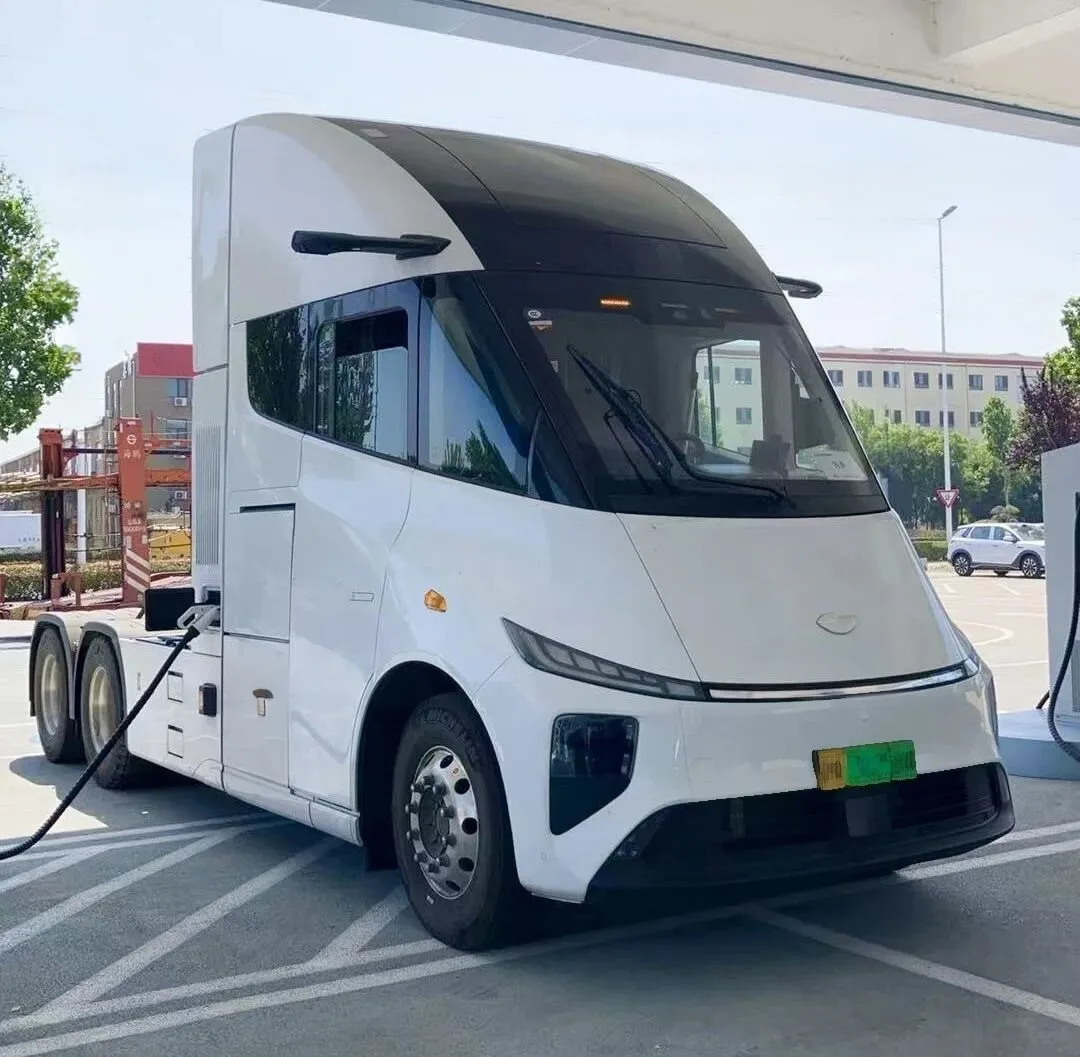
Battery-electric HGV charging. Short dwell times — 3–4 hours for return-to-depot cycles — demand 350–600 kW sustained per vehicle, making storage augmentation of the existing supply the most practical route for most logistics sites.
The same storage-augmented architecture applies at scale. Power Plant — Neutron's containerised 3,727 kWh ESS with 1 MW AC output in a standard 20-ft ISO container — can be deployed alongside Power Hubs to match the specific fleet profile and dwell pattern. Multiple units in parallel are managed by the same Grid EMS. The DC bus architecture and Master Unit distribution layer remain identical to the bus depot configuration.
For operators who do have access to a high-voltage connection, or who are commissioning one as part of a wider site development, the 11kV HV Direct architecture — a factory-assembled unit integrating HV switchgear, transformer, LV distribution, and charger output — is the right conversation. It delivers up to 35% reduction in project engineering cost and programme timelines up to two-thirds shorter than conventional site-built infrastructure.
For operators who cannot wait 18 months and cannot absorb a £400,000 grid upgrade, storage augmentation of the existing low-voltage supply is the faster and often more economic path to the first vehicle charging.
The Practical Starting Point
The right starting point is not a charger specification. It is a load profile.
How many vehicles? What are the dwell times? What does the existing supply look like, and what is the DNO saying about upgrade costs and timescales? What roof area is available for PV?
Those four inputs define the storage capacity, Master Unit configuration, and PV sizing that avoid the grid constraint altogether. Neutron's engineering team works through that assessment before any procurement decision is made — producing a system design matched to the specific site and fleet, with a funding structure that makes the economics viable.
Talk to our engineering team about your depot.
We'll assess your site load profile, existing supply, and fleet requirements — and build a storage-augmented architecture that works within the infrastructure you already have.
Request an Engineering Assessment